

By Dr. Jennifer Ebner, DDS | Innovative Dentistry Biltmore | Phoenix, Arizona
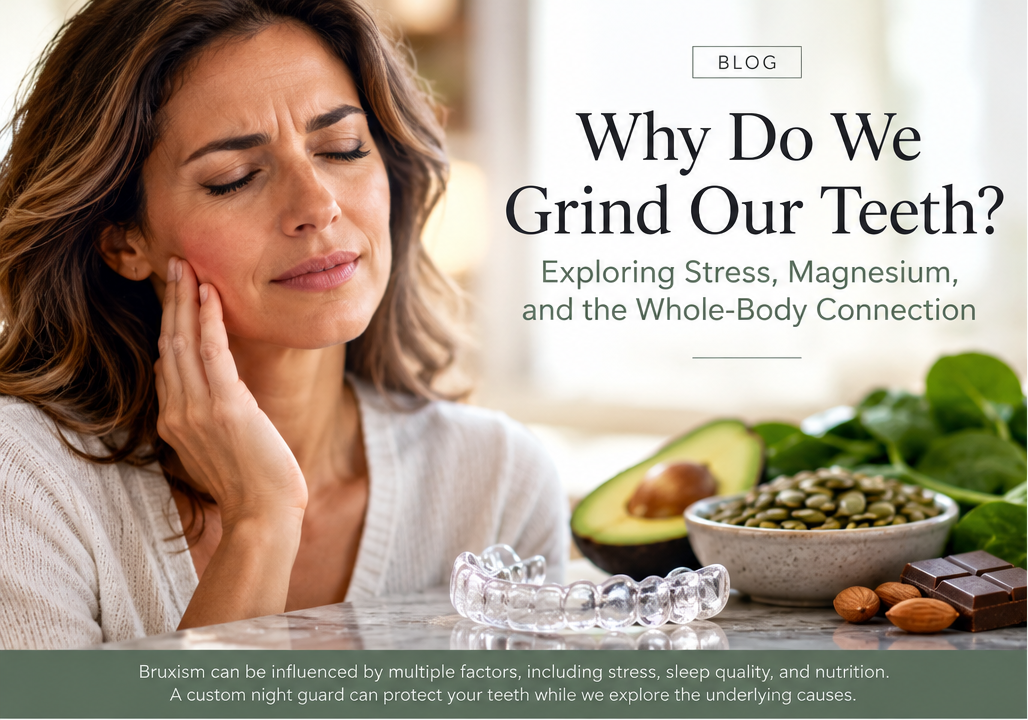
Teeth grinding can be influenced by stress, sleep problems, medications and other health factors. Dr. Jennifer Ebner discusses possible triggers behind bruxism and the damaging effects.
If you wake up with a sore jaw, experience frequent headaches, or have been told that you grind your teeth at night, you may be experiencing a condition called bruxism.
Teeth grinding and clenching are surprisingly common, and their effects can extend well beyond the teeth. Over time, excessive pressure will cause worn down enamel, broken teeth and fillings, sensitive teeth, gum recession, and tight, painful jaw muscles and TMJ.
As a biological dentist practicing in Phoenix, I know treating the symptoms of a problem is important, but finding out what is actually causing the symptoms is what leads to reduce the damage.
Why is the grinding happening in the first place?
The answer is usually multifaceted. Stress, sleep disturbances, medications, and other health factors can all play a role. Researcher is indicating that nutritional factors, such as magnesium deficiency, might also contribute to heavy clenching and grinding.
Understanding the possible contributing factors can help develop a more successful approach to protecting your teeth, gums, bone, and the TMJ.
What Causes Teeth Grinding?
Bruxism can happen when someone is awake or sleeping.
Awake bruxism: Clenching, bracing, or grinding the teeth while awake, often associated with concentration, stress, or emotional tension.
Sleep bruxism: Involuntary jaw-muscle activity during sleep, which involves different neurological and sleep-related mechanisms, including sleep apnea.
Both forms will damage teeth over time, they don’t have the same causes.
Someone who clenches their jaw throughout a stressful workday may benefit from mindfulness, and relaxation strategies. Someone who grinds their teeth at night may need to be evaluated for sleep apnea.
This distinction matters because the techniques and appliances that work for daytime grinding are different than those for night-time grinding.
Could Magnesium Deficiency Contribute to Teeth Grinding?

Leafy greens, pumpkin seeds, almonds, and avocados provide magnesium, an essential mineral for our body’s normal muscle and nerve function. It’s role in contributing to bruxism is being studied.
Magnesium is an essential mineral involved in hundreds of biochemical processes throughout the body, including muscle function, nerve signaling, and energy metabolism.
Because magnesium helps regulate normal muscle contraction and relaxation, researchers have studied whether magnesium deficiency could contribute to excessive jaw-muscle activity. There are other signs that appear with magnesium deficiency that may help this diagnosis.
Early research doesn’t absolutely link magnesium deficiency as a cause of bruxism or that magnesium supplements stop teeth grinding. That doesn't mean nutrition is irrelevant. It is one of the possibilities to consider when looking for reasons and solutions to heavy teeth grinding and the problems it can cause.
Magnesium, Stress, and Sleep: Understanding the Connection
Magnesium has attracted attention because of its involvement in several body processes that can influence how we feel and function.
Muscle function: Magnesium contributes to normal muscle and nerve activity. Significant deficiency can produce neuromuscular symptoms. This doesn’t mean it causes jaw clenching.
Stress regulation: Magnesium participates in neurological pathways involved in the body's stress response. Research has studied whether supplementation may improve stress-related symptoms, but results are not black and white.
Sleep quality: Some studies suggest magnesium supplementation may offer some improvement in sleep for some people. Strong evidence for this remains limited. And better sleep does not necessarily mean less sleep bruxism.
The practical point here is that nutrition, sleep, and stress deserve attention when evaluating someone with painful clenching or grinding. They are pieces of a larger puzzle, not the explanation alone.
Should You Take Magnesium for Teeth Grinding?
I discourage patients from adding supplements to their diet based solely on something they have read or seen online. If you think your diet is missing something or you have a medical condition that increases your risk of magnesium deficiency, a discussion with your physician is in order. Supplements can change the way your medications work that you might not expect.
Magnesium is naturally present in many healthy foods, including:
Pumpkin seeds, almonds, and other nuts
Spinach and leafy green vegetables
Beans and lentils
Whole grains
Avocados
Dark chocolate
For many people, improving dietary variety is an easy starting point.
Magnesium supplements are available in several forms, including magnesium glycinate and magnesium citrate. Absorption and GI tolerance differ among varieties, but no particular form has been established as an effective treatment for bruxism.
Patients with kidney disease or those taking medications that may interact with magnesium need to be cautious with supplements. Blood testing may help identify some deficiencies, although a normal serum magnesium result does not always reflect total body magnesium stores.
My recommendation is confirm any nutritional deficiencies with your physician first, and don’t make supplements a complete treatment plan for bruxism.
Why a Night Guard May Be Important—But Isn't the Whole Answer
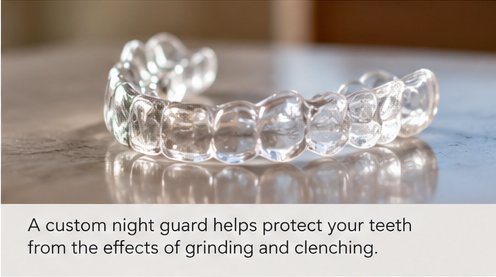
A professionally fitted night guard helps protect your teeth, gums and dental restorations from the damaging forces of long term, night time grinding and clenching.
A custom designed night guard is extremely valuable for patients who grind or clench their teeth.
It helps protect the teeth and dental restorations from excessive forces over time. This is particularly important for patients with porcelain veneers, ceramic crowns, implants, or significant tooth wear and gum recession.
A custom night guard does not eliminate the neurological or behavioral activity responsible for bruxism. It does offer protection from the excessive forces effects. I let my patients know that protecting the teeth, gums and crowns from clenching or grinding is necessary as most times bruxism can’t be completely stopped.
For my patients, I recommend being aware of their daytime clenching habits and stress, and releasing their bite or stretching the jaw muscles. For others, it means considering sleep quality, medications, jaw-muscle discomfort, or signs of obstructive sleep apnea.
Is Sleep Apnea Be Connected to Teeth Grinding

Sleep quality and night time clenching and grinding can be connected. Understanding sleep- related symptoms of clenching and grinding is part a comprehensive plan for protection from grinding at night.
Sleep-related breathing problems can be especially hard on teeth.
Research has linked sleep bruxism and obstructive sleep apnea in some patients. The relationship is complex and one does not automatically indicate the other.
If a patient snores while sleeping, has interrupted sleep, morning headaches, or daytime sleepiness, I refer them to a sleep physician for a sleep study. The sleep study is a definitive way to detect obstructive sleep apnea, which carries serious health concerns itself.
At Innovative Dentistry Biltmore, I provide custom dental appliance therapy for patients with obstructive sleep apnea that can’t or won’t wear a CPAP.
These appliances are different that night guards, so accurate diagnosis and appliance selection are essential.
My Approach to Bruxism: Protect the Teeth, Understand the Cause
I've learned that my patients benefit when I look beyond a single sign or symptom, and consider the overall causes of dental problems.
When people come to my Phoenix office with worn and cracked teeth, jaw and muscle pain, or chipped or missing dental restorations, my goal is to understand not only what is happening in the mouth, but also what might be contributing to it.
Depending on the patient, that involves evaluating tooth wear, jaw function, clenching habits, sleep-related symptoms, medications, and relevant medical or nutritional concerns.
A personalized treatment plan may include a custom night guard, stretching and relaxation exercises to manage of jaw-muscle discomfort, fixing fillings and crowns when necessary, or referral to a sleep physician.
The goal is not to promise that every cause and symptom can be eliminated. It is to identify the factors we can improve while protecting the teeth from continued damage.
This is at the core of biological dentistry, thoughtful, evidence-based care that recognizes the relationship between oral health and the rest of the body and prevention.
Are You Grinding Your Teeth? Let's Find Out Why.
If you've noticed flattened, cracked or chipped teeth, frequently sore jaw muscles or teeth, morning headaches, or repeated problems with crowns and restorations, don't wait for pain or catastrophic damage to occur.
At Innovative Dentistry Biltmore, I evaluate each patient for teeth grinding, clenching, and TMJ-related concerns, with an emphasis on preserving natural tooth structure and protecting long-term dental health.
We welcome people from Phoenix, Biltmore, Arcadia, Scottsdale, and surrounding communities, including those looking for a new dentist who takes a comprehensive approach to care.
Schedule a consultation to discuss your symptoms and explore the right options for protecting your teeth, gums and TMJ.
Research and Further Reading
Updated International Bruxism Concensus
Lehvilä P. Bruxism and magnesium. Literature review and case reports. Proceedings of the Finnish Dental Society. 1974;70(6):217–224.
Zittermann A. Magnesium deficit—overlooked cause of low vitamin D status? BMC Medicine. 2013;11:229.
National Institutes of Health, Office of Dietary Supplements. Magnesium: Fact Sheet for Health Professionals.
International consensus literature on the assessment and definition of sleep and awake bruxism.
This article is intended for patient education and does not replace individualized dental or medical evaluation