

Dental Implants in Phoenix, AZ — Titanium, Zirconia & Metal-Free Options
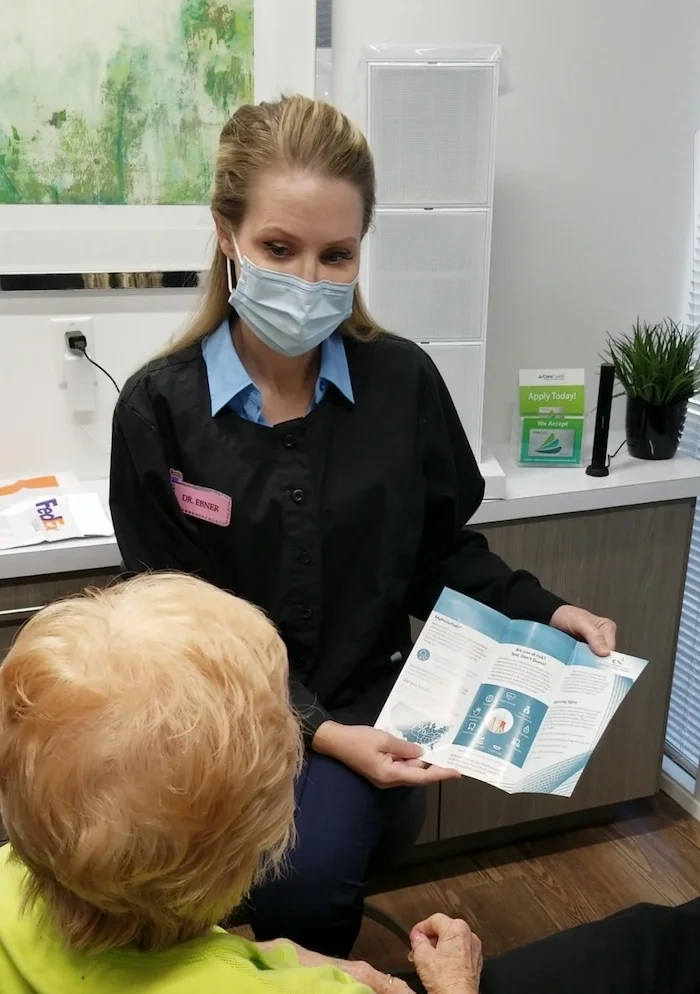
Dr. Jennifer Ebner at Innovative Dentistry Biltmore in Phoenix, AZ is AAID (American Academy of Implant Dentistry) fellowship trained in implantology — one of the most rigorous implant credentials available to a general dentist. She places both titanium dental implants and metal-free zirconia (ceramic) dental implants, selected based on patient preference, anatomy, and biological considerations. All implant surgeries are planned using Dental CBCT 3D imaging and a 3D-printed surgical guide for precision placement. Dr. Ebner incorporates PRF (Platelet-Rich Fibrin) therapy to accelerate healing and bone grafting to preserve jaw bone after extractions. The entire implant process — from consultation through final crown placement — is completed at a single practice using CAD/CAM digital crown fabrication. Dr. Ebner personally calls implant surgery patients from her cell phone the evening of their procedure.
CBCT
3D-guided surgical planning
2
Implant types — titanium & zirconia
AAID
Fellowship trained — advanced credential
1
Practice — start to final crown
Dr. Ebner's AAID fellowship training — what it means for your implant
Most general dentists placing dental implants in Phoenix have completed a weekend certification course — 1 to 3 days of lecture and perhaps a handful of supervised cases. Dr. Ebner's training is fundamentally different.
This is not a participation certificate. The AAID fellowship is earned through clinical volume, demonstrated expertise, and peer validation. When you choose Dr. Ebner to place your implant, you are choosing a dentist whose implant training has been independently verified by one of the oldest and most respected implant organizations in North America.
Titanium or zirconia implants — which is right for you?
Dr. Ebner offers both titanium and metal-free zirconia implants. The recommendation depends on your anatomy, health considerations, aesthetic priorities, and where in the mouth the implant will be placed.
Most common — longest track record
Titanium Dental Implants
Titanium has been used in dental implants for over 50 years with well-documented long-term success rates above 95%. It is the most studied implant material in dentistry. Titanium is lightweight, exceptionally strong, and highly biocompatible — it integrates with bone (osseointegration) reliably in the vast majority of patients. Dr. Ebner uses implant companies with long histories of high-purity titanium and documented success rates — not lower-cost alternatives with variable metal compositions.
50+ year track record
95%+ success rate
Any location in mouth
Strongest bone integration
Metal-free — biological option
Zirconia (Ceramic) Implants
Zirconia implants are a single-piece, metal-free ceramic alternative for patients who prefer to avoid any metal in the body — including those with metal sensitivities, autoimmune conditions, or who prefer a completely biological restoration. Zirconia is white in color (aesthetically ideal for patients with thinner gum tissue), highly biocompatible, and shows excellent clinical results in appropriate cases. Dr. Ebner will evaluate whether your anatomy and bite make you a good candidate for zirconia.
100% metal-free
White color — aesthetic
Biocompatible ceramic
Biological dentistry
How Dr. Ebner plans and performs dental implant surgery
Dr. Ebner's implant process integrates several layers of technology and biological support that distinguish her approach from a standard implant placement:
🔬 CBCT 3D Imaging & Surgical Guide
A Dental Cone Beam CT scan creates a full 3D image of your jaw, showing bone volume, nerve location, sinus position, and adjacent tooth roots. This data is used to virtually plan your implant placement — and then fabricate a 3D-printed surgical guide that physically constrains the drill to the pre-planned angle and depth during surgery. Less guesswork. Better outcomes.
🦴 Bone Grafting — Preserving Your Foundation
When a tooth is extracted, the surrounding bone begins to resorb — often rapidly. Dr. Ebner routinely places bone graft material immediately at extraction to preserve bone volume, prevent cavitation formation, and create the ideal conditions for a future implant. This proactive approach significantly increases implant success rates and reduces the need for extensive grafting later.
🩸 PRF — Biological Healing Accelerator
Platelet-Rich Fibrin (PRF) is made from a small sample of your own blood, spun in a centrifuge to concentrate your growth factors and healing platelets. This biological concentrate is placed at the implant site during surgery — accelerating osseointegration, reducing healing time, and supporting bone regeneration without synthetic additives or steroids.
💻 CAD/CAM Digital Crown Fabrication
When your implant has integrated, Dr. Ebner uses a digital intraoral scanner to capture the implant site, opposing teeth, and bite relationship. This scan goes to the digital dental lab the same day. Your final ceramic crown is computer-designed and precision-milled to fit perfectly — no goopy impressions, faster turnaround, exceptional fit.
📱 Dr. Ebner's personal call the night of your surgery: After your implant procedure, Dr. Ebner will call you directly from her personal cell phone to check on your comfort, answer questions, and make sure you have what you need as you heal. This is not a staff callback — it is Dr. Ebner personally. This level of post-surgical care is rare in any dental setting and reflects how seriously she takes your outcome.
The dental implant process — what to expect at every step
1 - Implant Consultation & CBCT Planning
Dr. Ebner reviews your complete medical history, evaluates your oral health, and takes a Vatech CBCT 3D scan of your jaw. This imaging reveals bone volume, nerve locations, sinus anatomy, and the exact position of adjacent teeth — everything needed to virtually plan your implant and fabricate a 3D-printed surgical guide. You'll see exactly where the implant will go and what the final restoration will look like before any surgery is scheduled.
~60–90 minute appointment
2 - Pre-Surgical Preparation
Dr. Ebner will walk you through the entire procedure before your surgery day. She may recommend specific supplements (including Vitamin D) to support immune function and healing. If a tooth needs extraction first, bone grafting will typically be performed at the same appointment to preserve the socket for your future implant. Sedation options — including oral sedation and IV sedation — are available for patients who prefer to sleep through the procedure.
Supplements recommended 2–4 weeks before
3 - Implant Placement Surgery
Using the 3D-printed surgical guide, Dr. Ebner places the titanium or zirconia implant post into the prepared bone site with precision. PRF concentrate is placed around the implant to support initial healing and bone integration. A healing abutment or temporary restoration is placed over the implant. Dr. Ebner personally calls you from her cell phone that evening to check on your comfort and answer any questions.
~60–90 minute procedure
4 - Healing & Osseointegration
The implant post gradually fuses with your jaw bone — a process called osseointegration that typically takes 3 to 6 months. During this period, you'll wear a temporary tooth-colored restoration so there's no visible gap. Dr. Ebner monitors your healing at follow-up visits and will test the implant's stability before proceeding to the final crown.
3–6 months healing period
5 - Final Crown Placement
Once the implant has integrated solidly, Dr. Ebner takes a digital scan of the implant site and surrounding teeth. This is sent to the CAD/CAM dental lab the same day. Your final ceramic crown is computer-designed for precise fit, matched to the color and shape of your surrounding teeth, and seated permanently. The result looks, feels, and functions like a natural tooth.
Same-practice — no referral to another office
How much do dental implants cost in Phoenix, AZ?
Dental implant cost varies depending on whether bone grafting is needed, which type of implant is placed, the complexity of the case, and the final crown design. At Innovative Dentistry Biltmore, Dr. Ebner's treatment coordinator provides a complete, itemized cost estimate at consultation — including insurance benefits verification before you leave the office.
TYPICAL INVESTMENT RANGES IN PHOENIX
Single implant + crown (simple case)
$3,000 – $4,500
Zirconia implant + ceramic crown
$4,500 – $6,500
Implant + bone graft + crown
$4,000 – $6,000
Multiple implants
Consultation pricing
Why implants cost more than bridges or dentures — and why they cost less long-term: A dental bridge requires grinding down two healthy adjacent teeth. A denture gradually leads to bone loss. Neither solves the problem of a missing tooth root. A dental implant replaces the root, preserves bone volume, and — with proper care — is a one-time investment that can last a lifetime. Root canal treatments on compromised teeth, repeated crown replacements, and eventual extraction followed by an implant will cost significantly more than placing an implant correctly the first time.
Insurance: Many PPO plans provide partial coverage for the implant crown component. Our insurance coordinator will verify your benefits before your consultation. Financing: CareCredit and Cherry payment plans up to 5 years available. Our dental savings plan ($349/year) provides 20% off implant treatment for uninsured patients.
Why Phoenix patients choose Dr. Ebner for their dental implant
🔬
CBCT + 3D Surgical Guide
Every implant is virtually planned in 3D and executed with a printed surgical guide — eliminating guesswork from the most important part of the process.
🌿
Biological — Metal-Free Option
Zirconia implants and ceramic crowns available for patients who prefer a completely metal-free restoration. High-purity titanium used for all standard implants.
🩸
PRF Biological Healing
Your own blood's growth factors accelerate osseointegration and healing — no synthetic additives, no steroids. Biological healing from the inside out.
📱
Personal Cell Phone Follow-Up
Dr. Ebner calls every implant patient personally from her cell phone the evening of surgery. Not a staff member. Not an automated message. Dr. Ebner.
🏠
Complete Care, One Practice
Consultation, surgery, healing, and final CAD/CAM crown — all at Innovative Dentistry Biltmore. No referrals, no coordination between offices.
Dental implant FAQs — answered honestly
Does getting a dental implant hurt?
The surgery itself is performed under local anesthesia — you should feel pressure but not pain during placement. Post-surgical soreness is manageable with over-the-counter pain medication for most patients and typically resolves within a few days. Dr. Ebner also offers oral sedation and IV sedation with an anesthesiologist for patients who prefer to sleep through the procedure. The personal phone call she makes that evening ensures you have direct access to her if anything feels unexpected.
Am I a candidate for a dental implant?
Most adults in good general health are candidates for dental implants. Ideal candidates have adequate jaw bone volume to support the implant, healthy gum tissue, and no uncontrolled systemic conditions (such as uncontrolled diabetes) that significantly impair healing. Patients with bone loss may be candidates after bone grafting. Dr. Ebner evaluates candidacy at the CBCT consultation — giving you a definitive answer based on your actual 3D anatomy, not a general estimate.
What is the difference between titanium and zirconia implants?
Titanium has the longest track record (50+ years) and the highest volume of clinical data — it is the standard of care for most implant cases. Zirconia is a metal-free ceramic alternative preferred by patients with metal sensitivities, autoimmune concerns, or biological dentistry preferences. Zirconia is white in color and aesthetically ideal in the visible smile zone for patients with thinner gum tissue. Dr. Ebner will recommend the right type based on your specific anatomy and health priorities.
How long do dental implants last?
A properly placed dental implant in a healthy patient, maintained with regular cleanings and good home care, can last a lifetime. The implant post itself — the part that integrates with bone — has no biological lifespan limitation. The ceramic crown on top typically lasts 15–25 years before it may need replacement from normal wear. This is why the lifetime cost of a dental implant is typically lower than repeated restoration of a compromised natural tooth.
What is CBCT-guided implant surgery and why does it matter?
CBCT (Cone Beam CT) imaging provides a 3D map of your jaw, showing bone density, nerve locations, sinus position, and adjacent tooth roots that a standard 2D X-ray cannot reveal. This data allows Dr. Ebner to virtually plan exactly where the implant will go — at what angle, depth, and diameter — before touching the surgical site. The 3D-printed surgical guide physically limits the drill to the pre-planned path during surgery, dramatically reducing the margin for error in a procedure that is highly technique-sensitive.
What is PRF and why does Dr. Ebner use it?
PRF (Platelet-Rich Fibrin) is a concentrate of your own blood's healing platelets and growth factors, made from a small blood draw taken at the start of your appointment. Placing PRF at the implant site during surgery significantly accelerates bone integration, reduces healing time, and supports natural tissue regeneration — without synthetic growth factors, antibiotics, or steroids. As a biological dentist, Dr. Ebner uses PRF routinely for implant surgeries and extractions because it supports the body's own healing mechanism rather than overriding it.
Ready to replace that missing tooth — permanently?
Dr. Ebner's implant consultations include a Pano x-ray, a full treatment plan with itemized pricing, and insurance verification — everything you need to make a completely informed decision. No pressure, no commitment required.