
Do GLP-1 Medications Affect Your Teeth? Oral Health and Dental Side Effects
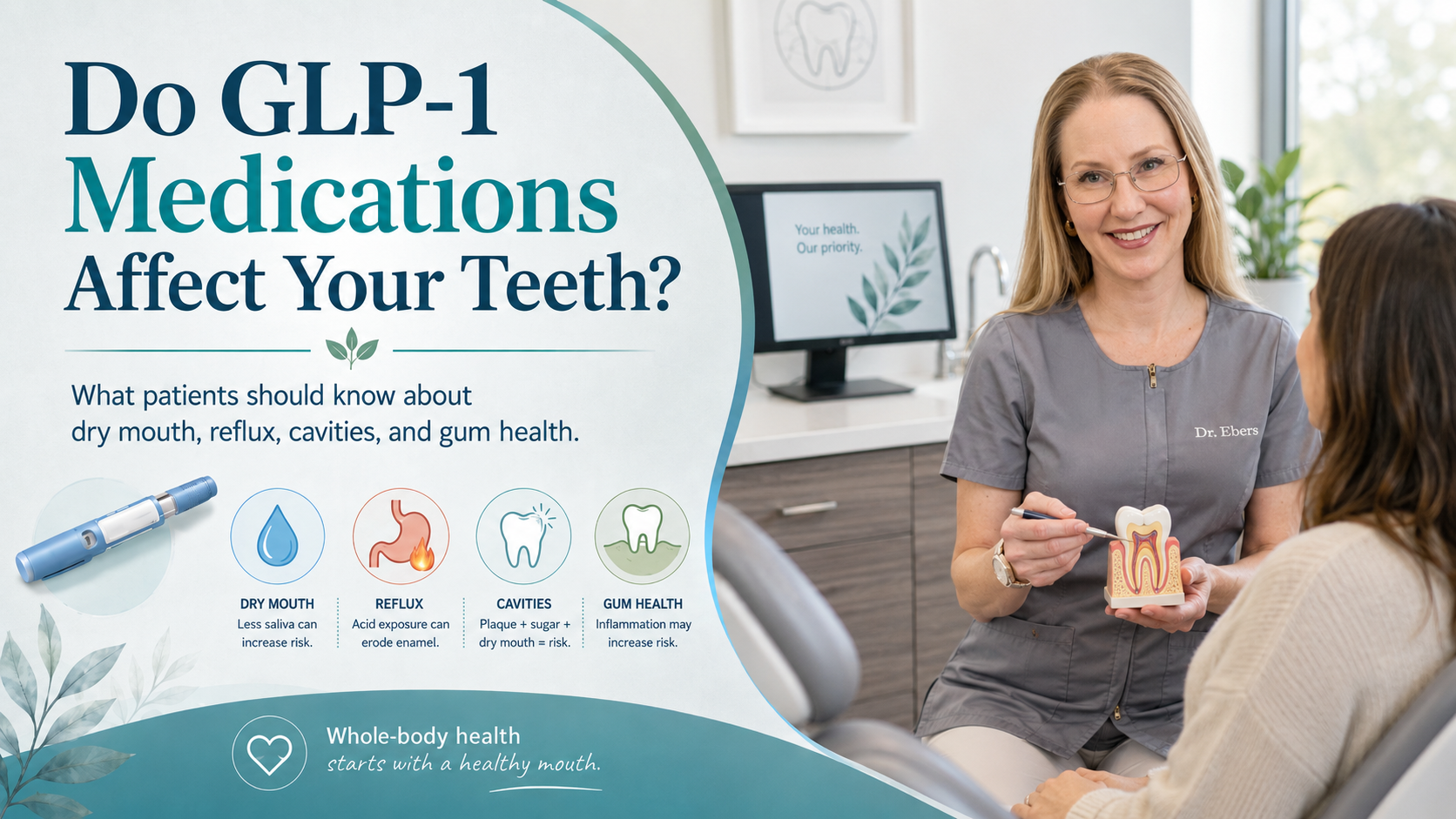
Dr. Ebner discusses how GLP‑1 medications (Ozempic, Wegovy, semaglutide) can affect dental health and what patients should know.
GLP-1 medications have become part of a lot more patient conversations lately. Drugs like Ozempic, Wegovy, Mounjaro, and Zepbound are being used for diabetes, weight management, and other metabolic health goals, and many patients are seeing meaningful benefits.
What often gets less attention is that some of the changes these medications create in the body can also show up in the mouth.
That doesn’t mean GLP-1 medications are “bad for your teeth.” It means they can change things like saliva, appetite, hydration, reflux, and eating habits and all of those can affect oral health.
As a biological dentist, that matters to me because I don’t look at a cavity or an inflamed gum as an isolated problem. I want to understand what may have changed in the patient’s overall health that could be contributing to what I’m seeing.
I’m also seeing more patients using GLP-1 medications not only for diabetes and weight loss, but sometimes in very small doses as part of broader wellness goals. Because people don’t always think of these medications as relevant to their dental care, they may forget to mention them. But changes in saliva, inflammation, and cavity risk can all matter in the mouth, which is why I encourage patients to tell us about every medication or supplement they’re taking, even if it seems unrelated to their teeth.
Dry Mouth Is One of the Biggest Things I Watch For
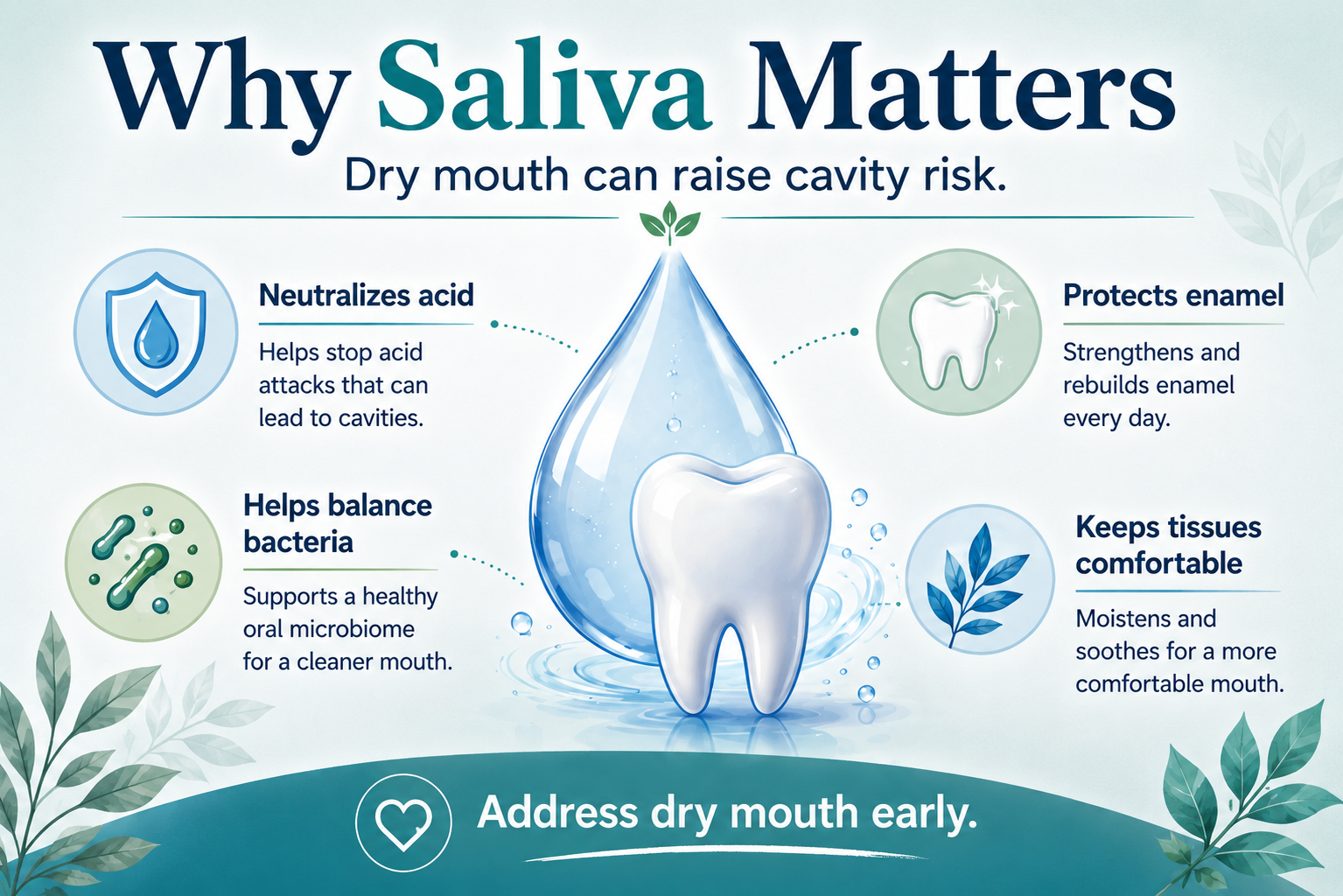
Dr. Ebner suggests peventive steps patients should take to improve moisture in their mouth.
One of the most important oral changes being discussed with GLP-1 medications is dry mouth.
Saliva may not sound very exciting, but it does a tremendous amount of work for us. It helps wash the mouth, neutralize acid, support enamel, keep tissues comfortable, and protect against decay.
When saliva decreases, the mouth can become more vulnerable.
Acid can sit on the teeth longer. Enamel has less help recovering. Cavities may develop more quickly, and sometimes they show up in places we don’t typically expect.
Research is still evolving when it comes to whether GLP-1 medications directly affect the salivary glands, so I don’t assume the medication is automatically the cause. Instead, I look at the whole picture: Has the patient become drier? Are they drinking less? Has their diet changed? Are they taking other medications that also reduce saliva?
Saliva is one of the mouth’s natural defenses, so I prefer to address dry mouth early rather than wait for damage to show up. Depending on the patient, that may mean simple ways to stimulate saliva, products that help keep the mouth moist, or prescription-strength toothpaste. Preventing that damage is much easier and usually much less expensive than repairing a series of new cavities later.
Reflux, Nausea and Vomiting Can Affect Teeth Too
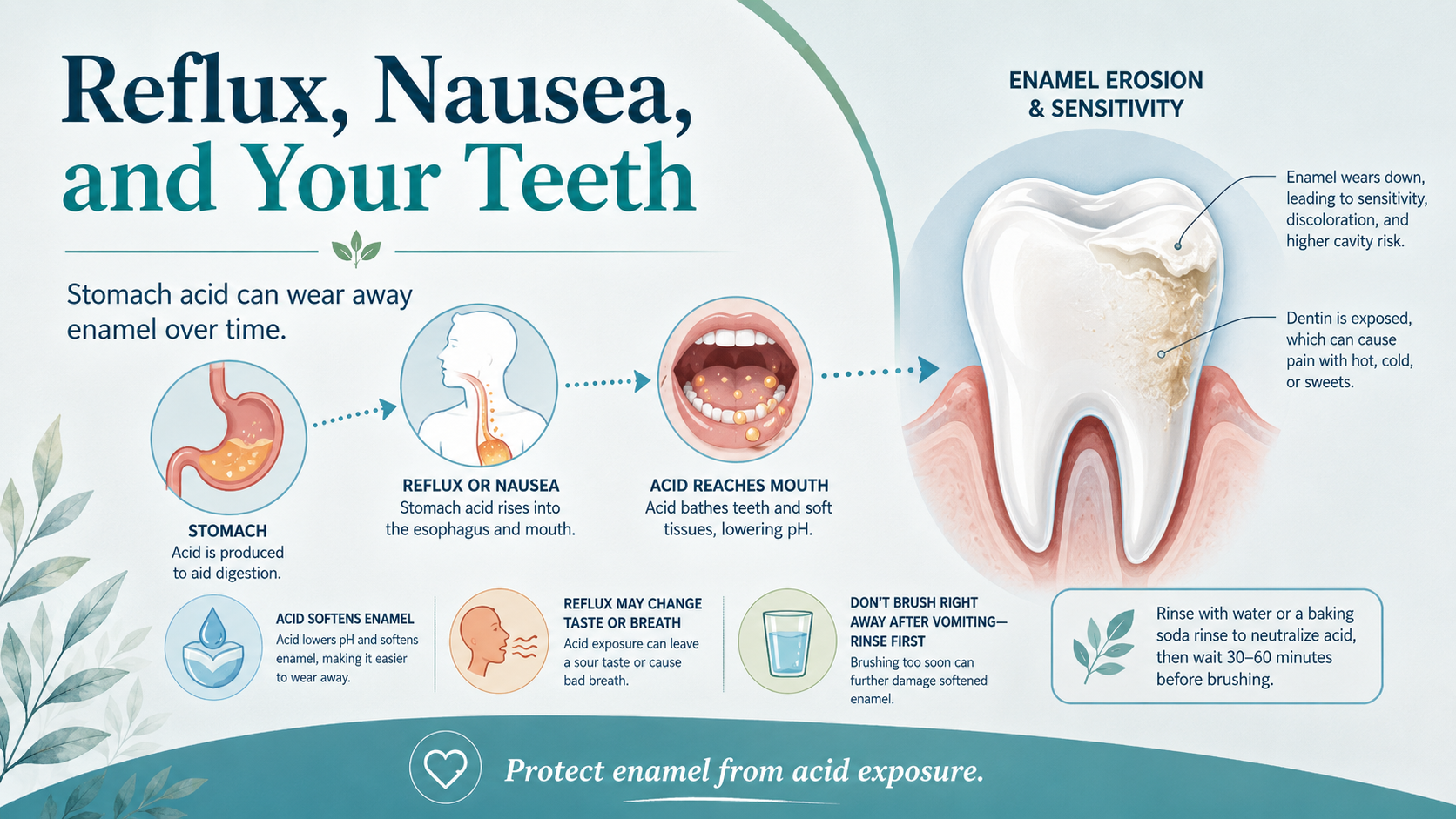
Caring for your teeth while taking GLP-1 medications includes addressing the known side effects.
The digestive side effects of GLP-1 medications are better known.
Nausea, vomiting, delayed stomach emptying, belching, and reflux can all occur with these medications, although not everyone experiences them.
From a dental standpoint, the concern is repeated exposure to stomach acid.
That acid can soften enamel. Over time, frequent reflux or vomiting can contribute to erosion, sensitivity, and thinning of the tooth surface.
This is also why I tell patients not to brush immediately after vomiting. It seems like the natural thing to do, but brushing softened enamel can actually add more wear. Rinsing first and giving the mouth a little time to recover is a better approach.
Reflux can also contribute to changes in taste and breath, which some patients may notice before they ever connect those symptoms to their medication or digestion.
Appetite Changes Can Affect the Mouth in Unexpected Ways
GLP-1 medications are designed to change appetite, and that can create some indirect effects in the mouth too.
Some patients using GLP-1 medications have also reported altered taste, dry mouth and changes in breath.[2]
Some people eat less often. Some drink less without realizing it. Others change the kinds of foods they eat pretty dramatically.
That can influence hydration, nutrition, saliva, and even the environment that oral bacteria live in.
There is growing interest in whether GLP-1 medications may also affect the oral microbiome, but the science is not yet strong enough to make broad claims. It’s an interesting area, but still an emerging one.
You may have seen phrases like “Ozempic mouth” or “Ozempic teeth.” Those terms make good headlines, but they are not real dental diagnoses and can make the issue sound much simpler than it actually is.
We update our patients’ health histories regularly because those details really do matter. A new medication, a change in diet, or even drinking less water can help explain why someone’s mouth is suddenly behaving differently even though they haven’t changed how they care for their teeth. Knowing what has changed helps us catch potential problems earlier and personalize their care before a small issue becomes a bigger one.
Could There Be Benefits for Gum Health Too?
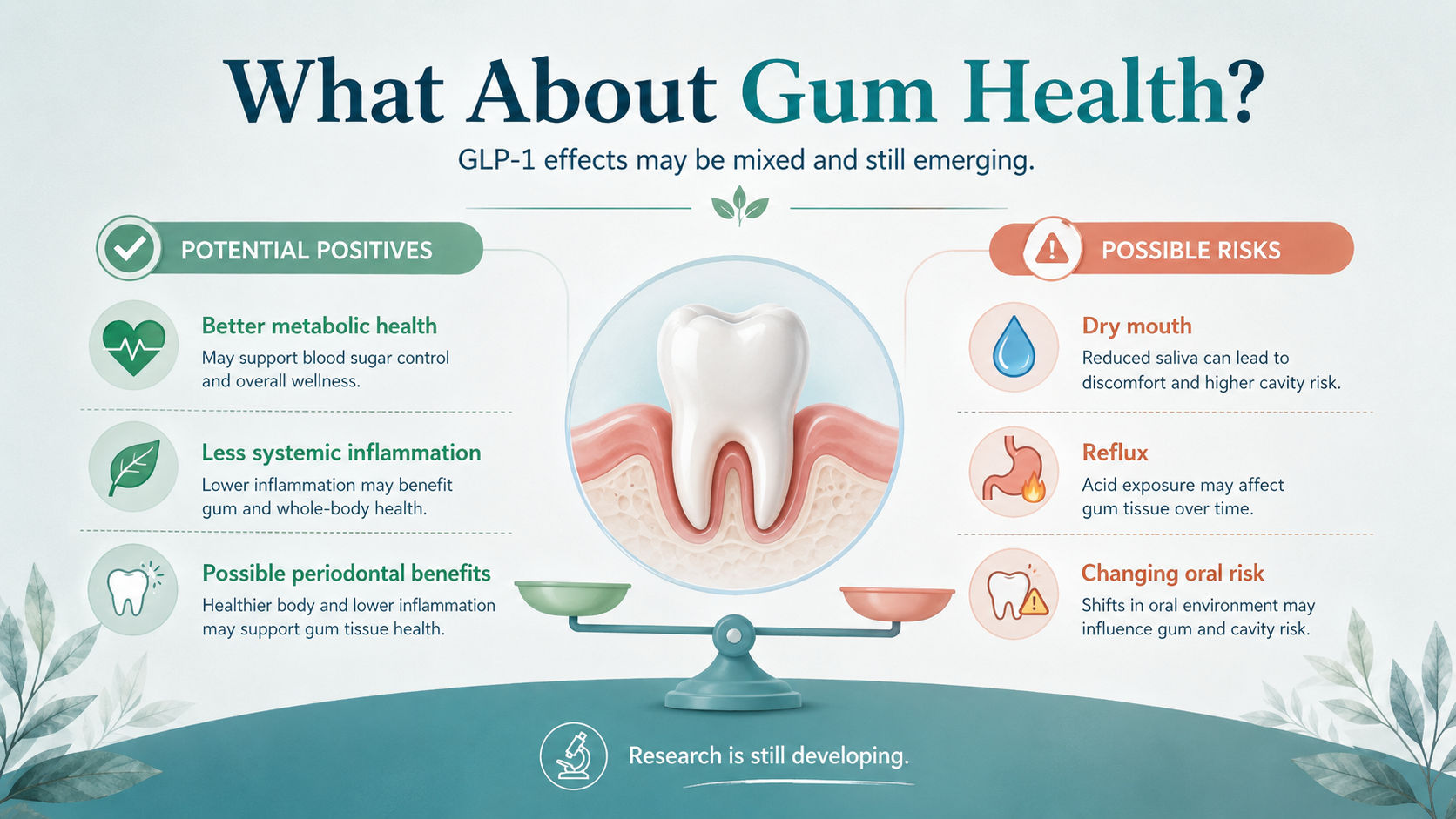
Gum health can be protected from the side effects of semaglutide and other GLP-1 medications.
This is where the research gets especially interesting.
It would be too simplistic to assume that GLP-1 medications only create problems in the mouth.
Because these medications can improve blood sugar, reduce certain forms of inflammation, and improve metabolic health, researchers are also looking at whether they might have positive effects on gum health.
Early research suggests there may be some benefit to periodontal inflammation, especially in people with metabolic disease, but we do not yet have enough strong human data to say exactly what that means in everyday dental care.[5]
The same patient may even experience both sides at once: better metabolic health on one hand, but more dry mouth or reflux on the other.
That is a good example of why I believe dentistry works best when we look at the whole patient rather than treating one tooth at a time.
What I Recommend to Patients Taking a GLP-1
If you take a GLP-1 medication, tell your dentist.
Let us know which medication you take, the dose if you know it, and how long you’ve been on it.
Also mention any new dry mouth, reflux, vomiting, strange taste, changes in breath, tooth sensitivity, or major changes in how much you are eating or drinking.
Those symptoms do not automatically mean your medication is harming your teeth. They simply give us more information about what may be changing in your mouth.
If dry mouth is becoming a problem, there are often simple things we can do to help protect the teeth before cavities start. If reflux or vomiting is persistent, that is also something worth discussing with the physician managing the medication.
That decision to start or stop a medically prescribed GLP-1 medication belongs between the patient and their physician. My role as their dentist is to help identify and manage dental concerns that GLP-1 medications may influence.
The Goal Is Prevention, Not Fear
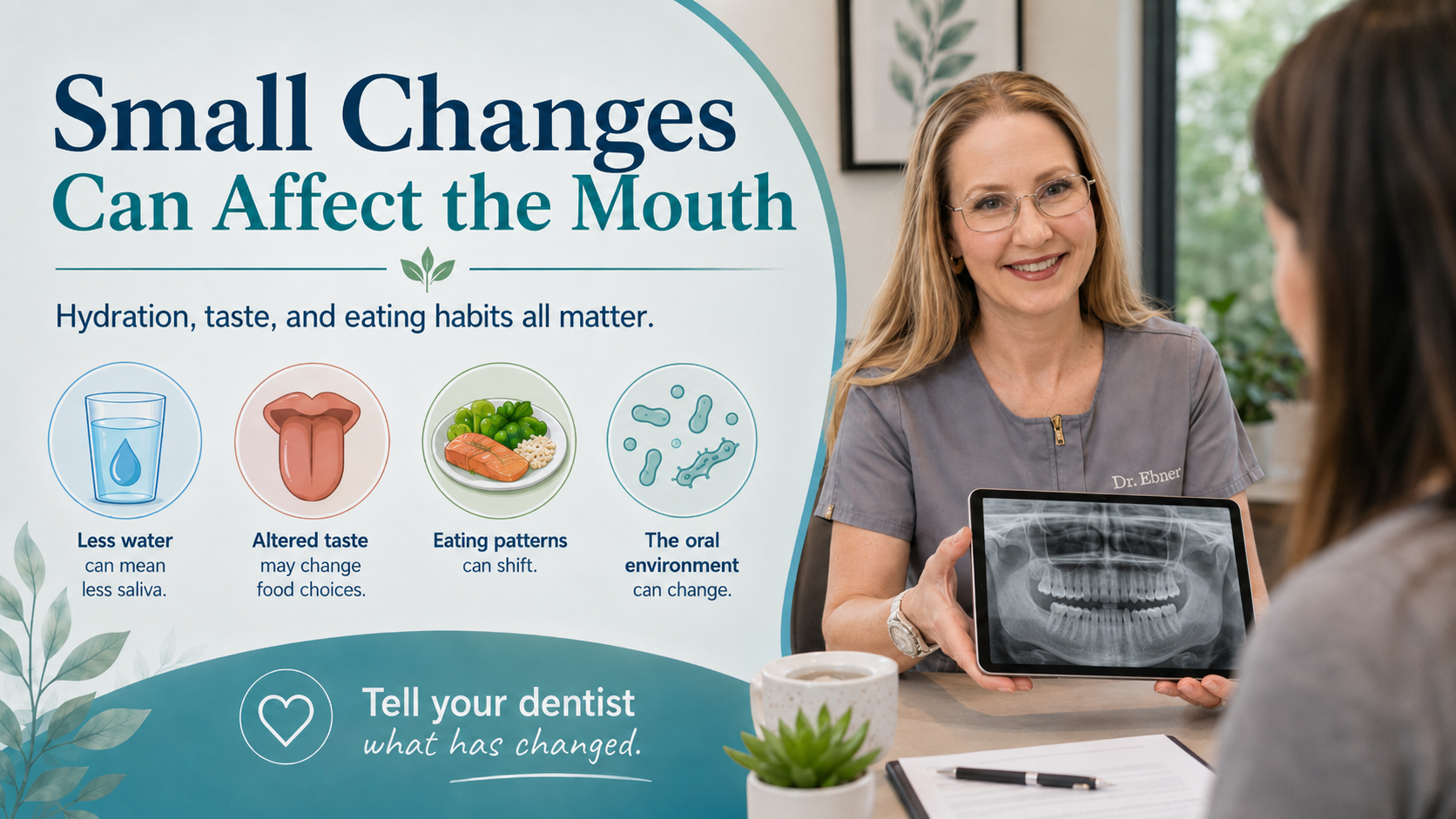
GLP‑1 medications like semaglutide (Ozempic, Wegovy) can indirectly affect oral health. Open communication with your dentist and physician help minimize risks.
GLP-1 medications are another reminder that the mouth and the rest of the body are not separate.
Medicine and dentistry shouldn't operate as entirely separate worlds. A medication can be doing something very beneficial for a patient’s overall health while also changing saliva, digestion, appetite, or hydration in ways that affect the teeth and gums.
My role as a biological dentist is to notice those changes early and help patients protect their oral health along the way.
What’s especially interesting about GLP-1 medications is that we’re continuing to learn how their benefits may extend beyond weight loss and diabetes, including areas such as cardiovascular health and sleep apnea. Whether one of these medications is right for you is a conversation to have with your physician. As your dentist, my focus is on what’s happening in your mouth along the way, watching for changes early and helping protect your teeth and gums with thoughtful prevention and only the dental treatment you truly need.
References
Barać M, Roganović J. GLP-1 Receptor Signaling and Oral Dysfunction: A Narrative Review on the Mechanistic Basis of Semaglutide-Related Oral Adverse Effects.Biology. 2025.
Khan FI, et al. Otolaryngologic Side Effects of GLP-1 Receptor Agonists.The Laryngoscope. 2025.
Xie X, Yang S, Deng S, et al. Comparative gastrointestinal adverse effects of GLP-1 receptor agonists and multi-target analogs in type 2 diabetes: a Bayesian network meta-analysis.Frontiers in Pharmacology. 2025.
Kofman K, Ouanounou A. Oral Health Considerations and Dental Management Guidelines for Semaglutide Medications.Canadian Journal of Diabetes. 2026.
Bijoch J. Oral Health Implications of GLP-1 Receptor Agonists and Other Incretin-Based Therapies.Journal of Clinical Medicine. 2026.