

Q: Can I get the smile I want with only four dental veneers? Why would I want to cut more teeth and get six or even ten dental veneers?
When patients consider improving their smile with dental ceramic veneers, one of the most common questions is whether to veneer just the four front teeth or all of the upper teeth. While both options can deliver beautiful results, they serve different goals and come with important aesthetic, functional, and long-term considerations. The answer to that question is depended on a person’s goals for their smile and the variables that make them unhappy with how their teeth look-staining, chips, crooked or gapped teeth, bad or failing dental bonding, and more.
Four to six front teeth veneers typically refer to veneering the teeth that show most when you smile—usually the upper central incisors, lateral incisors, and even the canines. This approach is often ideal for patients whose concerns are limited to discoloration, chips, minor misalignment, or shape issues in the most visible part of the smile. Because fewer teeth are treated, this option is generally less expensive, requires less preparation, and can be completed more quickly. For patients with naturally healthy, well-colored back teeth, four or six veneers can create a noticeable and confident smile improvement without over-treating.
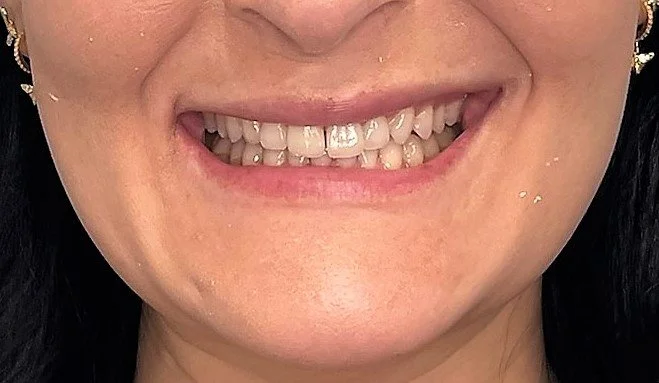
Yellow, stained, crooked teeth can affect one’s self-confidence and comfort smiling.
Four and six veneers can have limitations. If the premolars (the teeth just behind the canines) are visible when you smile or talk—which is common for people with wider smiles—the transition from veneered teeth to natural teeth may be noticeable over time. Differences in brightness, translucency, or shape can subtly reveal where the veneers stop, especially as natural teeth darken with age while ceramic veneers remain color-stable.
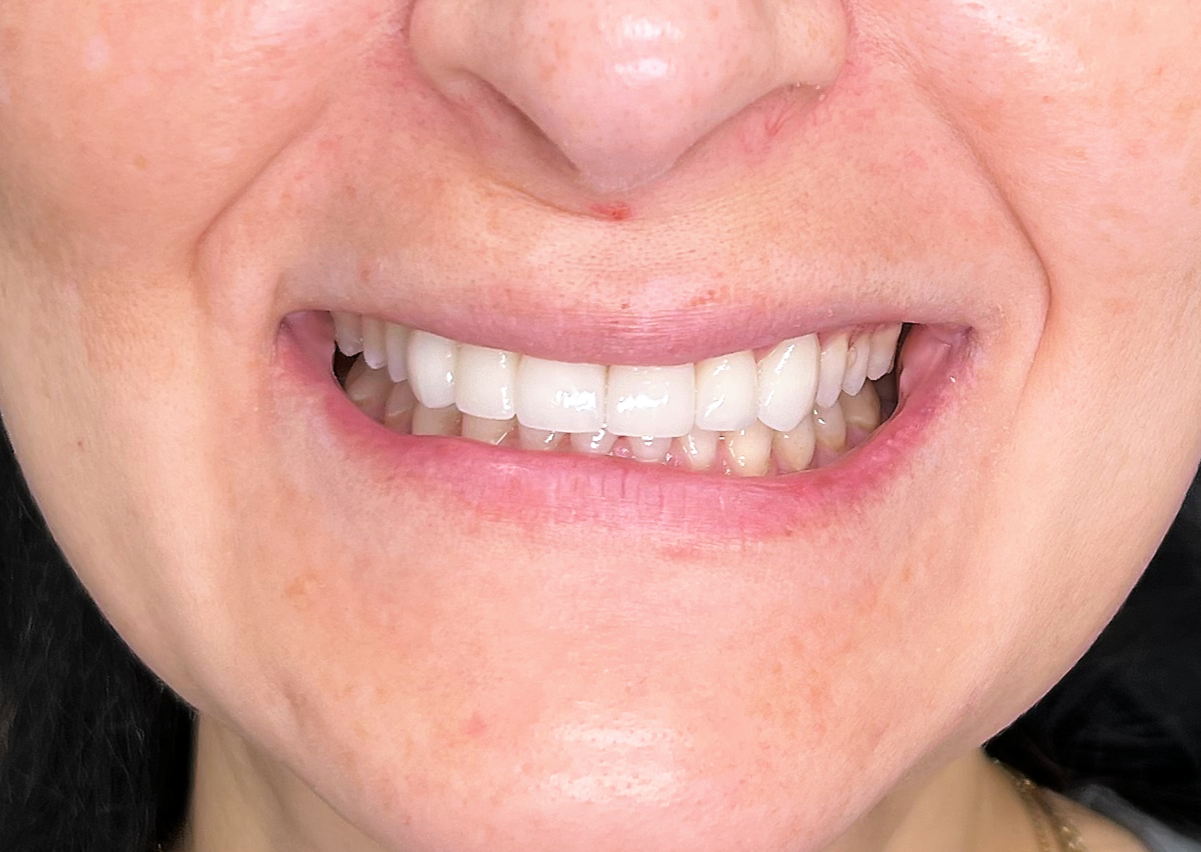
Six ceramic veneers brightens the smile, lightens the front teeth and straightens teeth.
Veneering all of the upper teeth—typically eight to ten teeth—takes a more comprehensive, smile-design approach. This option is often recommended for patients seeking a fully uniform, high-end aesthetic result. By including the premolars, the dentist can control the color, shape, symmetry, and proportions across the entire visible smile. This is particularly beneficial for patients with significant discoloration, worn enamel, old bonding, or uneven tooth anatomy throughout the upper arch.
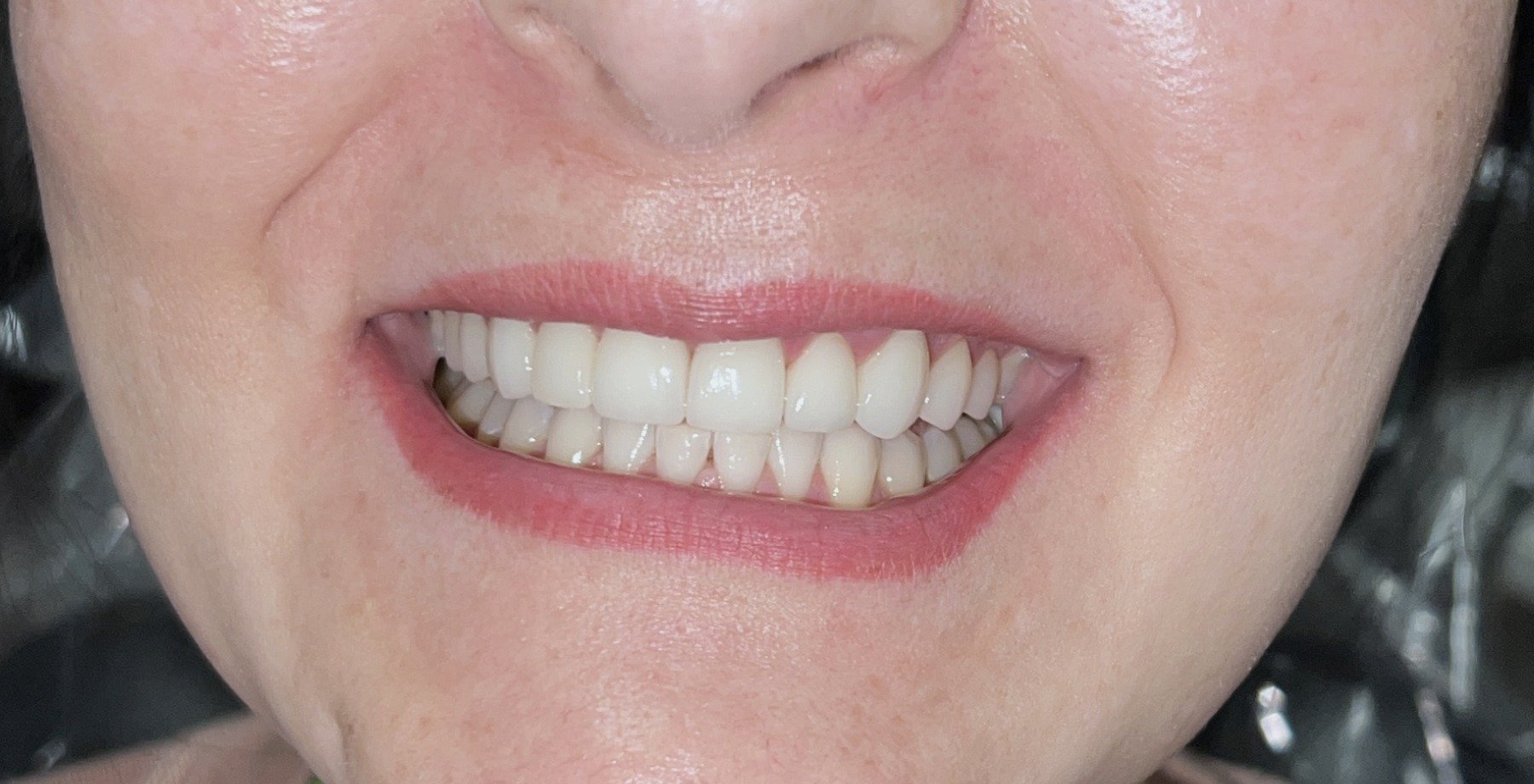
This person returned to add more dental veneers to improve the back teeth also. The result is a more even, white smile and a fuller smile from brightening the back teeth as well as the front teeth.
From a functional standpoint, full upper veneers can also help harmonize the bite and distribute forces more evenly, especially in patients with grinding, clenching, or wear patterns. While this approach involves a greater investment and more detailed planning, it often delivers the most natural, seamless, and long-lasting cosmetic outcome.
Another key difference is longevity of appearance. Ceramic veneers do not stain, but natural teeth do. When only six teeth are veneered, future whitening of the remaining teeth may be needed to maintain color harmony. With full upper veneers, color consistency is maintained for many years with minimal maintenance beyond routine care.
Choosing between four or six front veneers and full upper veneers depends on your smile width, cosmetic goals, bite considerations, and long-term expectations. Four to six dental veneers can be an excellent solution for targeted enhancement, while full upper veneers are best for patients seeking a fuller bright smile and cohesive, timeless smile transformation. A personalized evaluation and smile design consultation with Dr. Ebner, Phoenix dentist, are essential to determining which option will deliver the best result for you.
All the photos in this article are current patients of Dr. Ebner, Phoenix Cosmetic Dentist. The dental veneers placed are from 1 to 4 years old and are still in function, without chipping, gum inflammation, or staining. As a biological dentist who has extensive training in cosmetic dentistry, Dr. Ebner is uniquely dedicated to the functional health of the cosmetic work she performs as well as natural-looking results.